


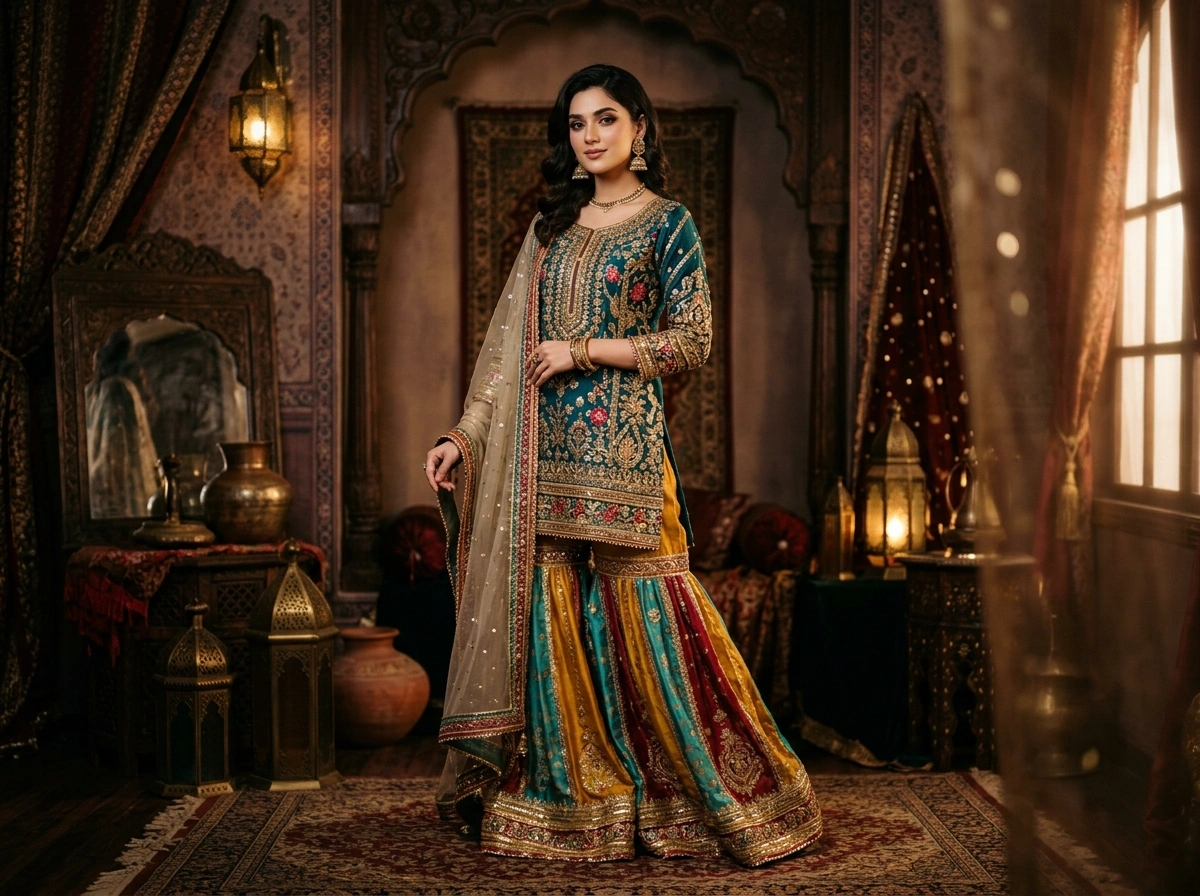
Few garments tell a story quite like the sharara. With its flowing flared legs, intricate embroidery, and undeniable presence, this outfit has traveled from royal Mughal courts to modern runways and Instagram feeds. Today, women across the United States are rediscovering the sharara—not as a relic of the past, but as a canvas for self-expression that honors heritage while embracing what’s fresh.
This article walks you through the sharara’s rich history, its journey into modern fashion, and practical ways to style it for any occasion. You’ll learn how to choose fabrics, pair accessories, and strike that perfect balance between timeless tradition and current trends.
A Garment Rooted in Royal History
The sharara traces its origins to the Mughal era, where it was worn by women of nobility in the courts of northern India and present-day Pakistan. Crafted from luxurious fabrics and adorned with elaborate handwork, it signaled status, grace, and refinement.
Originally, the sharara consisted of wide-legged, pleated trousers paired with a short kurti and a flowing dupatta. The dramatic flare from the knee down gave the wearer an elegant silhouette, especially while seated during long ceremonial gatherings.
Why the Sharara Endured
Cultural garments often fade with time, yet the sharara persisted. A few reasons explain its staying power:
- Comfort meets drama: The loose fit allows easy movement, while the flared design adds visual impact.
- Craftsmanship value: Each piece often features hours of hand embroidery, making it a treasured heirloom.
- Versatility: It adapts beautifully to different fabrics, colors, and occasions.
The sharara isn’t simply clothing. It carries memory, artistry, and a sense of belonging across generations.
From Mughal Courts to Modern Wardrobes
The sharara has experienced waves of popularity over the decades. It surged in mid-20th century cinema, faded during minimalist fashion phases, and roared back as designers reimagined it for contemporary tastes.
What makes today’s revival special is the freedom of interpretation. Modern women aren’t bound by strict rules. They mix vintage embroidery with sleek tailoring, pair traditional dupattas with statement footwear, and treat the sharara as a starting point rather than a fixed formula.
For a closer look at how this iconic outfit has been reinvented for current trends, the curated collections at sharara dress showcase the range of styles available to today’s shopper.
The Modern Sharara at a Glance
- Lighter, breathable fabrics for everyday comfort
- Shorter or asymmetrical kurtis for a fresh silhouette
- Bold color blocking alongside classic gold and crimson
- Minimalist versions for those who prefer understated elegance
This blend of old and new is exactly what keeps the sharara relevant in diverse, fashion-forward markets.
Styling Your Sharara for Every Occasion
One of the sharara’s greatest strengths is its adaptability. The same silhouette can feel regal at a wedding or relaxed at a brunch. Here’s how to approach different settings.
For Weddings
Weddings call for richness and detail. Choose deep, saturated colors like maroon, emerald, or royal blue, often paired with gold zardozi or sequin work.
- Opt for heavier fabrics such as silk, velvet, or brocade.
- Add a heavily embellished dupatta draped over one shoulder.
- Complete the look with traditional jewelry—jhumkas, a maang tikka, and stacked bangles.
The goal is to look celebratory without feeling overwhelmed. Let one element, like the embroidery or jewelry, take the spotlight.
For Festivals
Festivals such as Eid, Diwali, or cultural celebrations invite vibrant, joyful styling. Here you have room to play with color and pattern.
- Bright hues like teal, magenta, and mustard work beautifully.
- Mix printed kurtis with solid sharara bottoms for contrast.
- Keep accessories festive but comfortable for long days of celebration.
For Casual and Everyday Wear
Yes, the sharara can be casual. The trick is to simplify.
- Choose cotton, georgette, or lightweight blends.
- Skip the heavy dupatta or replace it with a simple stole.
- Pair with flats or stylish sneakers for a modern, relaxed vibe.
A toned-down sharara makes a surprising statement at a daytime event, a dinner with friends, or even a creative workplace.
Choosing the Right Fabric and Embroidery
The fabric you select shapes the entire feel of your sharara. Each material brings its own personality.
Popular Fabric Choices
- Silk: Luxurious and structured, ideal for formal events.
- Georgette: Flowy and lightweight, great for movement.
- Velvet: Rich and warm, perfect for winter weddings.
- Cotton: Breathable and easy, suited for daily wear.
- Net and organza: Sheer and delicate, often layered for drama.
Embroidery and Detailing
Embroidery transforms a simple sharara into a work of art. Consider these classic techniques:
- Zardozi: Metallic thread work that adds opulence.
- Gota patti: Appliqué ribbon work popular in Rajasthani styles.
- Mirror work: Reflective accents that catch the light.
- Thread embroidery: Subtle, colorful patterns for understated charm.
Quick tip: Match the level of embroidery to the occasion. Heavy work for weddings, lighter detailing for everyday looks.
Pairing with Modern Accessories
Accessories are where tradition truly meets trend. The right additions can shift a sharara from classic to contemporary in seconds.
Footwear
- Traditional: Embroidered juttis or mojaris for an authentic touch.
- Modern: Block heels, strappy sandals, or even clean white sneakers for an unexpected twist.
Jewelry
- Layer delicate chains with one bold statement piece.
- Swap heavy gold sets for minimalist studs when going casual.
- Mix metals—gold and silver together feel current and effortless.
Bags and Extras
- A structured clutch elevates a festive look.
- A sleek crossbody bag keeps casual outfits practical.
- Sunglasses and modern hair accessories add a fresh, personal flair.
The key is intentional contrast. One modern element against a traditional base creates that coveted fusion look.
Tips for Mixing Traditional and Trendy Elements
Blending heritage with modern style is an art, but it follows a few reliable principles.
- Anchor with one classic piece. Let an embroidered dupatta or ornate sharara bottom be your foundation.
- Balance proportions. Pair a voluminous sharara with a fitted, crop-style kurti.
- Play with color confidently. Combine a traditional hue with a trending shade for visual interest.
- Edit your accessories. When the outfit is bold, keep extras minimal—and vice versa.
- Honor the craftsmanship. Respect the artistry by letting handwork shine rather than burying it under clutter.
Do/Don’t quick rule:
- Do experiment with modern silhouettes and footwear.
- Don’t overload the look with competing statement pieces.
These small choices help you create an outfit that feels both rooted and refreshingly new.
Bringing It All Together
The sharara is proof that fashion doesn’t have to choose between past and present. It thrives precisely because it holds both—centuries of craftsmanship and the creative spirit of today’s wearer.
To recap the essentials:
- Understand the sharara’s royal roots to appreciate its artistry.
- Match fabric and embroidery to your occasion.
- Style intentionally for weddings, festivals, or casual days.
- Use modern accessories to create thoughtful contrast.
- Let one element lead, and keep the rest balanced.
Whether you’re dressing for a grand celebration or a relaxed afternoon, the sharara offers a way to honor your heritage while expressing your individual style. Explore your fabric, color, and embroidery options, then start building a look that feels unmistakably yours. Your next standout outfit might just begin with a single, beautifully flared silhouette.

