


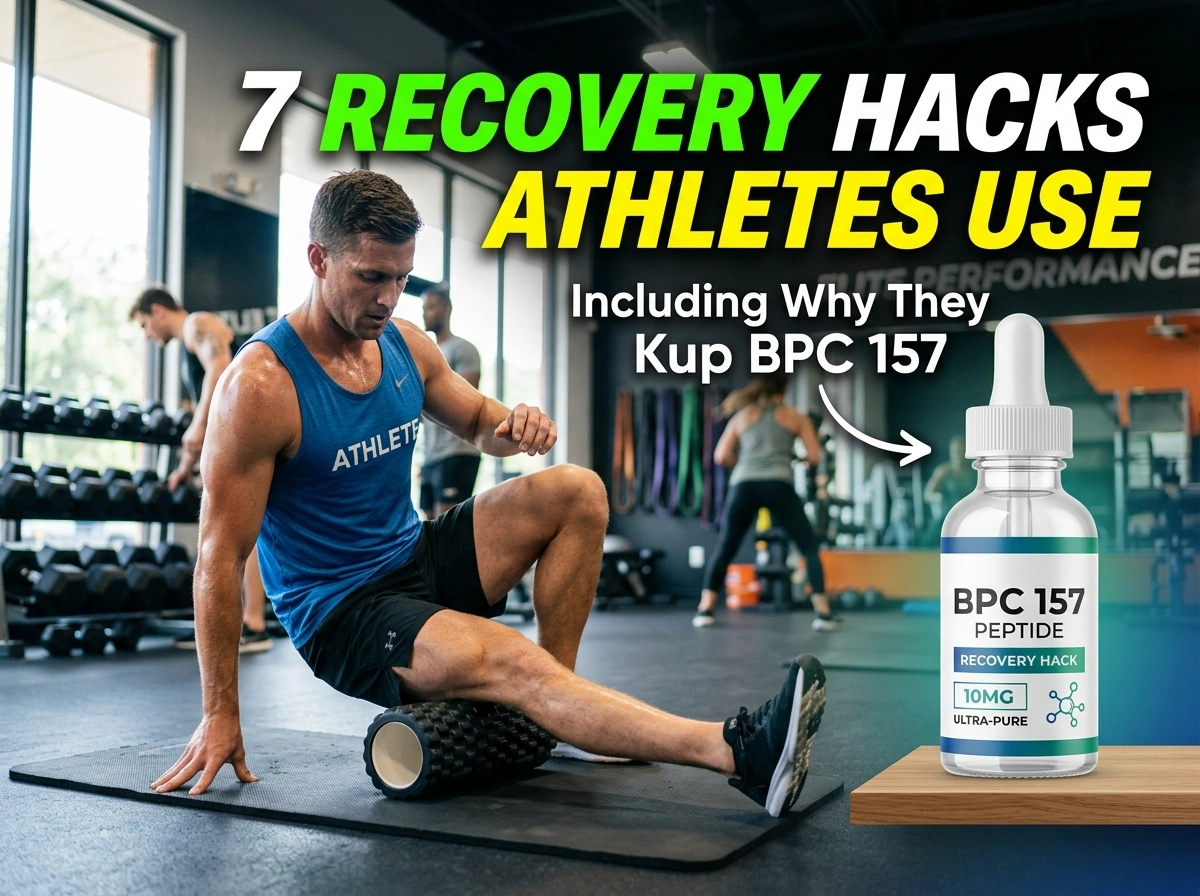
Recovery is where progress actually happens. You don’t get stronger during a hard session—you get stronger in the hours and days after, when your body repairs what training broke down. Smart athletes know this, which is why they treat recovery as seriously as the workout itself.
The problem? Most people leave recovery to chance. They train hard, sleep poorly, eat whenever, and then wonder why they feel flat or keep getting injured. The athletes who perform consistently follow a different playbook.
Below, you’ll find seven evidence-based recovery strategies that competitive athletes rely on—covering sleep, cold therapy, nutrition timing, active recovery, compression, mindfulness, and peptide supplementation. By the end, you’ll have a practical checklist you can start using right away.
1. Sleep Optimization: The Recovery Foundation
If you only fix one thing, fix your sleep. During deep sleep, your body releases the bulk of its growth hormone, repairs muscle tissue, and consolidates motor learning from training.
Most athletes need 7 to 9 hours per night, and many elite performers aim for more. Research on athletes shows that extending sleep improves sprint times, reaction speed, and accuracy.
How to sleep like an athlete:
- Keep a consistent bed and wake time, even on weekends.
- Drop your bedroom temperature to around 65°F (18°C).
- Cut screens 30–60 minutes before bed to protect melatonin production.
- Avoid caffeine after early afternoon—it lingers longer than you think.
In practice, a single extra hour of quality sleep often does more for recovery than any supplement on this list.
2. Cold Therapy: Calming Inflammation
Cold exposure—ice baths, cold showers, or cryotherapy—has long been a staple in locker rooms. The idea is simple: cold constricts blood vessels and helps reduce the swelling and soreness that follow intense effort.
A 10–15 minute cold plunge at roughly 50–59°F (10–15°C) can ease muscle soreness and help you feel fresher the next day.
When to use it: Cold therapy is best after high-impact competition or brutal training sessions. One caveat worth knowing—if your main goal is building muscle, avoid icing immediately after strength work, since cold may blunt some adaptation signals. Time it for rest days or after endurance efforts instead.
3. Nutrition Timing: Refuel the Right Way
What you eat after training matters, but when you eat it matters too. Your muscles are especially receptive to nutrients in the hours following exercise.
The recovery nutrition formula:
- Protein: 20–40 grams within a couple of hours post-workout to drive muscle repair.
- Carbohydrates: Replenish glycogen, especially after long or intense sessions. Aim for a 3:1 carb-to-protein ratio after endurance work.
- Fluids and electrolytes: Rehydrate to replace what you lost through sweat.
A simple example: a chicken-and-rice bowl, or a protein shake with a banana, checks most of these boxes without overthinking it.
4. Active Recovery: Move to Heal
Rest doesn’t always mean lying on the couch. Active recovery—light movement on your off days—boosts blood flow, clears metabolic waste, and reduces stiffness.
Think low intensity: an easy walk, gentle cycling, swimming, or mobility work. The goal is to elevate circulation without adding training stress.
A quick guideline: keep effort below 60% of your max heart rate. If you’re breathing hard, you’re working too hard for a recovery day.
5. Compression Therapy: Squeeze Out Soreness
Compression garments and pneumatic boots have moved from pro sidelines to everyday gym bags. By applying graduated pressure, they support venous return and may help reduce muscle swelling and perceived soreness.
Many athletes wear compression sleeves during long travel or slip into compression boots for 20–30 minutes after hard sessions. The evidence is strongest for reducing the feeling of fatigue and soreness, which can be enough to help you train again sooner.
What to look for: choose graduated compression (tighter at the extremity, looser toward the core) for the best circulatory benefit.
6. Mindfulness and Stress Management
Recovery isn’t only physical. Chronic stress keeps cortisol elevated, which interferes with sleep, tissue repair, and immune function. Managing your nervous system is a genuine performance lever.
Practical mindfulness tools:
- Breathwork: A few minutes of slow, controlled breathing shifts you into a recovery-friendly parasympathetic state.
- Meditation: Even 10 minutes a day can lower perceived stress and improve sleep quality.
- Mental downtime: Schedule real breaks from screens, competition pressure, and constant notifications.
In practice, athletes who manage stress well tend to recover faster simply because their bodies aren’t fighting a constant low-grade alarm.
7. Peptide Supplementation: The BPC 157 Question
This is the recovery topic generating the most buzz among athletes—and it deserves a careful, honest look.
What Is BPC 157?
BPC 157 is a synthetic peptide derived from a protein found in gastric juice. Its name stands for “Body Protection Compound.” In research settings, it’s been studied for its potential role in healing and tissue protection.
Proposed Recovery Benefits
Athletes are drawn to BPC 157 because of several reported effects observed largely in preclinical research:
- Tissue repair: It may support the healing of tendons, ligaments, and muscle by encouraging the formation of new blood vessels and aiding cell repair.
- Inflammation reduction: Some studies suggest it helps modulate inflammation, which could mean less downtime after injury.
- Gut health: Given its origin in the digestive system, it’s been examined for protective effects on the gut lining and digestion.
Why Athletes Choose It
For athletes dealing with stubborn soft-tissue injuries—a nagging tendon or a slow-healing strain—the appeal is obvious: faster, more complete recovery. That promise is why some choose to kup bpc 157 and add it to their recovery toolkit.
An Important Reality Check
Here’s the part too many articles skip. Most BPC 157 research has been conducted on animals, and large-scale human clinical trials are limited. It is not approved as a therapeutic drug in many regions, and it is banned by the World Anti-Doping Agency (WADA) for competitive athletes.
That means anyone competing under WADA rules risks serious consequences. Before considering any peptide, talk to a qualified medical professional, understand the legal status where you live, and weigh the lack of long-term human safety data. Recovery should never come at the cost of your health or eligibility.
Common Recovery Mistakes to Avoid
Even dialed-in athletes slip up. Watch for these:
- Chasing supplements before fixing sleep and nutrition. Foundations first.
- Never taking full rest days. Your body needs them to adapt.
- Treating soreness as a badge of honor. Persistent pain is a signal, not a goal.
- Ignoring stress. Mental fatigue undermines physical recovery.
Your Recovery Checklist
Bring it all together with a simple daily and weekly routine:
- ✅ Prioritize 7–9 hours of quality sleep
- ✅ Refuel with protein and carbs after hard sessions
- ✅ Use active recovery on rest days
- ✅ Add cold or compression therapy when appropriate
- ✅ Practice daily stress management
- ✅ Research any supplement thoroughly and consult a professional
Final Thoughts
The best recovery strategy isn’t a single hack—it’s a stack of smart habits working together. Sleep, nutrition, movement, and stress management form the foundation, while tools like cold therapy and compression fine-tune the results.
Newer options like peptide supplementation are tempting, but they demand caution, medical guidance, and a clear understanding of the rules you compete under. Start with the basics, build consistency, and treat your recovery as the performance edge it truly is.
Your next step? Pick one area where you’re falling short—most likely sleep—and improve it this week. Small, repeatable changes are what separate athletes who keep progressing from those who keep breaking down.

