

Tarot has captured hearts across the United States, from busy cities to quiet towns. More people than ever are picking up a deck to explore self-reflection, spark creativity, and gain a fresh perspective on life. If you’re just getting started, the cards can feel a little mysterious at first. That’s completely normal. Every experienced reader began exactly where you are now.
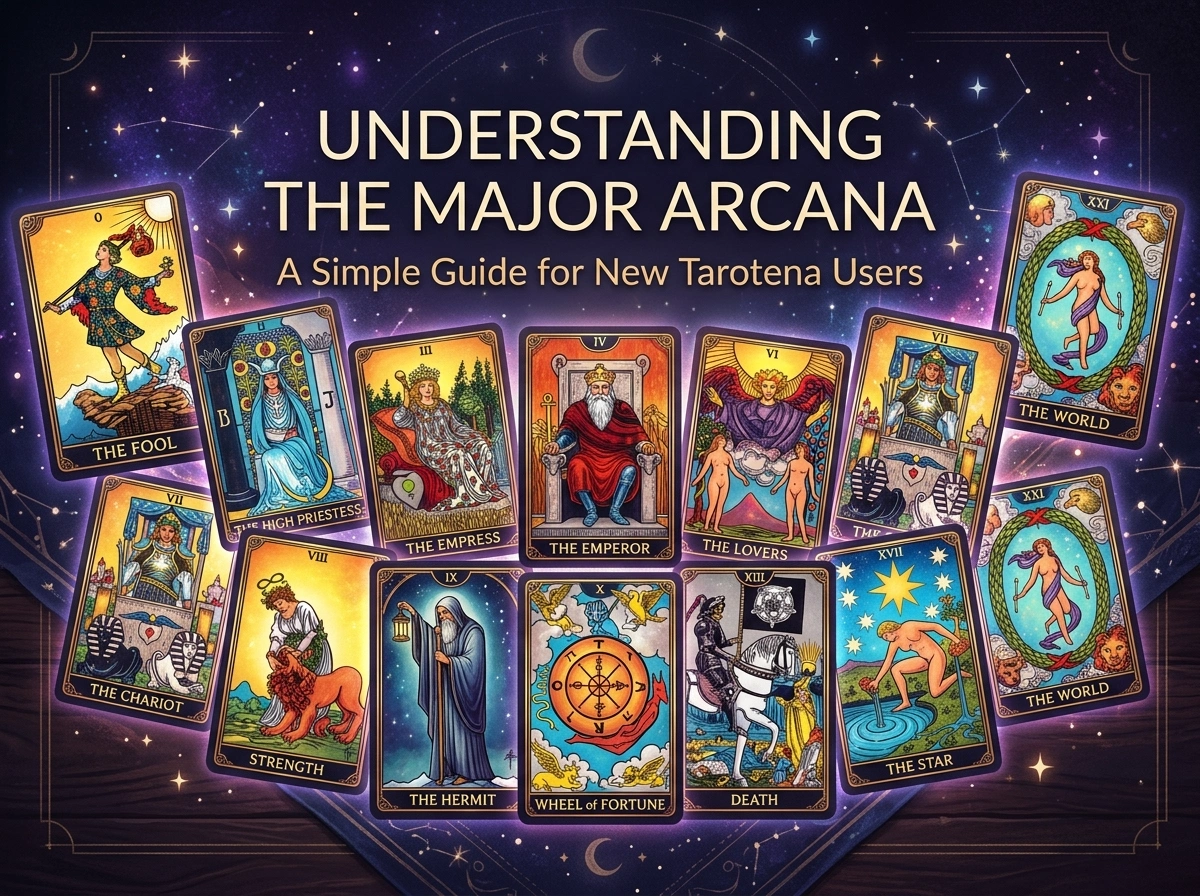
This guide focuses on the heart of any tarot deck: the Major Arcana. These 22 cards carry the biggest themes and life lessons. Once you understand them, the rest of your tarot journey becomes far easier. Let’s walk through what they mean and how to read them with confidence.
What Is the Major Arcana?
A standard tarot deck holds 78 cards, split into two groups. The Minor Arcana includes 56 cards that deal with everyday moments and smaller decisions. The Major Arcana holds the remaining 22 cards, and these represent the big turning points in life.
Think of the Major Arcana as chapters in a story. Together, they tell a tale often called “The Fool’s Journey.” The Fool sets out into the world, meets teachers and challenges, and grows along the way. Each card marks a step in that path of learning and change.
When a Major Arcana card shows up in a reading, it signals something meaningful. These cards point to lessons, transformations, and moments that shape who we become.
The 22 Major Arcana Cards Explained
Here’s a simple look at all 22 cards, from beginning to end. Each one carries its own energy and message.
0 – The Fool: New beginnings, fresh starts, and taking a leap of faith. The Fool reminds you to stay open and trust the road ahead.
1 – The Magician: Skill, willpower, and turning ideas into action. You have the tools you need to make things happen.
2 – The High Priestess: Intuition, mystery, and inner wisdom. Listen to your gut and trust what you feel.
3 – The Empress: Abundance, nurturing, and creativity. This card connects to growth, comfort, and care.
4 – The Emperor: Structure, authority, and stability. It speaks to leadership and building strong foundations.
5 – The Hierophant: Tradition, learning, and shared beliefs. It often points to mentors, teachers, or established systems.
6 – The Lovers: Relationships, choices, and harmony. This card highlights connection and important decisions.
7 – The Chariot: Determination, drive, and control. Success comes through focus and willpower.
8 – Strength: Courage, patience, and inner power. It shows that gentle strength often beats force.
9 – The Hermit: Reflection, solitude, and searching for truth. Sometimes you need quiet time to find answers.
10 – Wheel of Fortune: Cycles, luck, and change. Life keeps turning, and this card reminds you nothing stays the same.
11 – Justice: Fairness, truth, and accountability. It points to balance and honest choices.
12 – The Hanged Man: Pause, surrender, and new perspective. Sometimes waiting or letting go reveals a better path.
13 – Death: Endings, transformation, and rebirth. This card rarely means literal death. Instead, it signals major change and fresh starts.
14 – Temperance: Balance, patience, and moderation. It encourages blending different parts of life smoothly.
15 – The Devil: Temptation, attachment, and limits. It asks you to notice what holds you back.
16 – The Tower: Sudden change, upheaval, and awakening. The Tower shakes things up, often clearing space for something better.
17 – The Star: Hope, healing, and inspiration. After hard times, this card brings light and renewal.
18 – The Moon: Illusion, dreams, and uncertainty. It invites you to trust intuition when things feel unclear.
19 – The Sun: Joy, success, and positivity. One of the brightest cards, it promises warmth and good energy.
20 – Judgement: Reflection, renewal, and a calling. It marks a time of self-evaluation and rising to a new level.
21 – The World: Completion, achievement, and wholeness. The journey comes full circle, and a new one begins.
How to Interpret Major Arcana Cards in Readings
Reading tarot is less about memorizing exact meanings and more about connecting the cards to real life. Here are a few simple ideas to guide you.
Consider the Position
The spot where a card lands matters. In a past-present-future spread, The Tower in the “past” position might point to a change you already lived through. In the “future” position, it could hint at change coming your way.
Notice the Card Direction
Some readers use reversed cards, which means cards that appear upside down. A reversed card can soften, block, or flip the usual meaning. As a beginner, feel free to read all cards upright until you feel ready to add reversals.
Look at the Cards Together
Tarot tells a story through combinations. Two or three Major Arcana cards in one spread often signal a powerful, life-changing moment. Notice how the cards relate and what theme they share.
Trust Your Intuition
Your first reaction to an image often holds the truth. Card meanings offer a starting point, but your instincts bring the reading to life.
Practical Tips for Beginners
Starting your tarot practice should feel fun, not stressful. These tips will help you build confidence and enjoy the process.
- Start small. Try a one-card daily draw. Ask a simple question, pull one card, and reflect on it throughout your day.
- Keep a journal. Write down the cards you pull and your thoughts. Over time, you’ll spot patterns and track your growth.
- Learn one card at a time. You don’t need to memorize all 78 cards at once. Focus on a few each week.
- Create a calm space. A quiet, comfortable spot helps you focus and connect with the cards.
- Practice often. Like any skill, tarot improves with regular practice. Read for yourself, friends, or family.
- Stay open-minded. Tarot works best as a tool for reflection, not fixed prediction. Let it spark ideas and insight.
Beginners across the country are finding that digital tools make learning tarot easier than ever. Online platforms and apps offer guided readings, card meanings, and community support right at your fingertips. For a modern, easy-to-use way to explore your practice, check out tarotena, which helps new readers learn and grow at their own pace.
Common Questions New Readers Ask
Do I need special skills to read tarot?
Not at all. Anyone can learn. Tarot rewards curiosity, patience, and practice more than any special gift.
Is the Death card bad?
No. Despite its dramatic name, Death almost always points to positive transformation and fresh beginnings.
How long does it take to learn?
Everyone moves at their own speed. Some feel comfortable in weeks, while others enjoy learning over months or years. There’s no rush.
Bringing It All Together
The Major Arcana forms the backbone of tarot. These 22 cards carry the biggest themes we all face: change, love, challenge, growth, and completion. Once you understand their meanings, you’ll find that reading tarot feels natural and rewarding.
Remember, tarot is a personal journey. There’s no single “right” way to read the cards. Trust yourself, stay curious, and give yourself room to learn. Every card you pull teaches you something new about the deck and about yourself.
Take your time with The Fool’s Journey, and enjoy each step. With a little practice and the right tools, you’ll soon read the Major Arcana with ease and confidence.

