


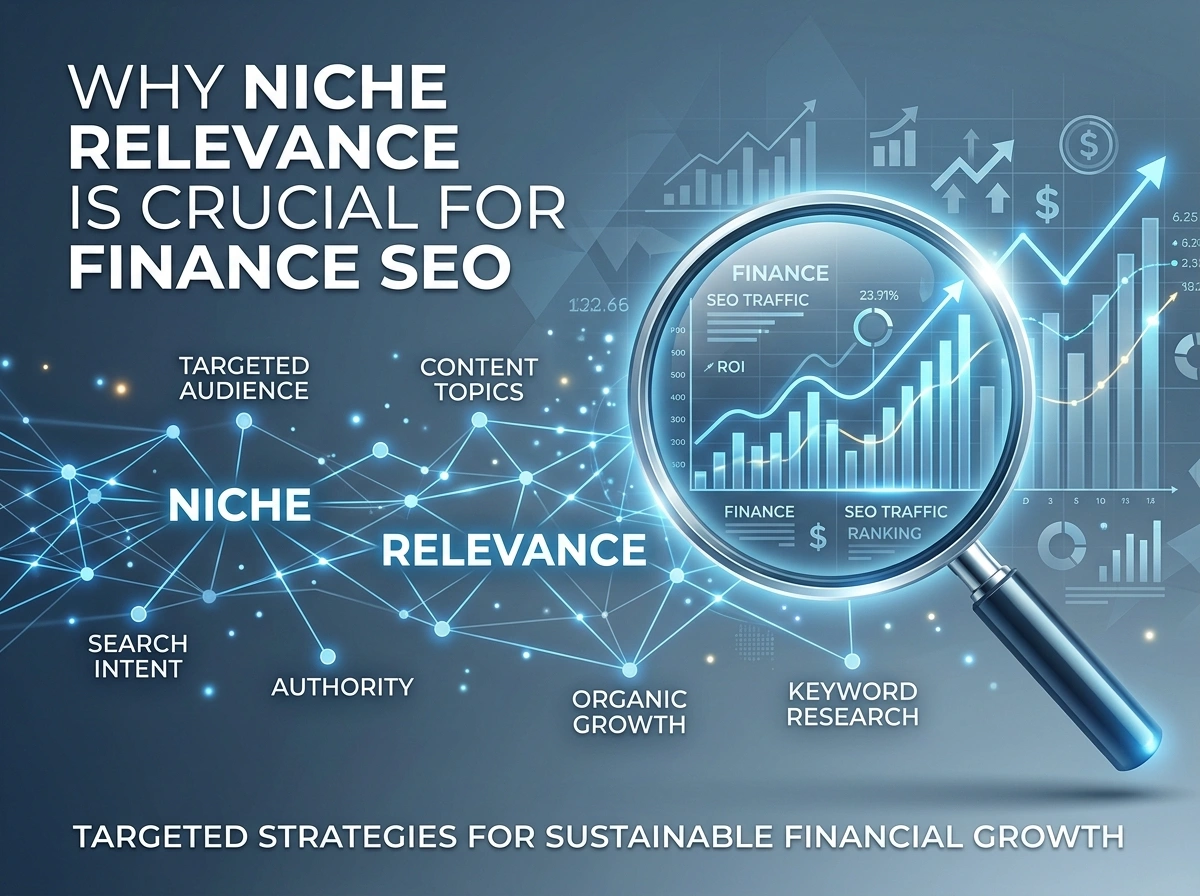
Building a digital presence in the financial sector requires a careful, strategic approach. You cannot simply scatter links across the internet and hope your website climbs the search engine ranks. Google and other search engines apply intense scrutiny to financial websites, categorizing them under the “Your Money or Your Life” (YMYL) designation. This means the content you produce and the backlinks you acquire must meet exceptional standards for accuracy, authority, and relevance.
When you publish articles on external websites to build your backlink profile, the context of those external sites matters immensely. A link from a popular cooking blog might provide a temporary metric boost, but it will do very little to convince search algorithms that you are a financial expert. Niche relevance acts as the core foundation of a successful link-building strategy. It proves to both users and search engines that you belong in the financial conversation.
This comprehensive guide explains why maintaining strict topical alignment is essential for your digital growth. You will learn how the right placements enhance your SEO authority, generate high-quality traffic, and establish your brand as a credible voice in the financial space. We will also cover actionable methods to identify the perfect platforms for your content.
The Impact of Niche Relevance on SEO Authority
Search engines have evolved far beyond counting the sheer volume of links pointing to a website. They now assess the contextual relationship between the linking site and your own pages. This concept is often referred to as topical authority.
When you secure a link from a website dedicated to investing, banking, or wealth management, you send a strong signal about your own website’s expertise. Google’s algorithms analyze the surrounding text, the overall theme of the linking domain, and the specific category of the page. If all these elements align with the financial services you offer, the backlink carries significant weight.
Conversely, acquiring links from unrelated niches can actually harm your SEO efforts. Search engines might view out-of-context links as manipulative or spammy. A consistent pattern of highly relevant placements proves that other experts in your specific field endorse your content. This validation directly contributes to your domain’s overall authority, allowing you to compete for highly sought-after financial search terms.
Building Trust and Credibility within the Financial Industry
Trust operates as the primary currency in the financial sector. Before a potential client hands over their life savings, invests in a cryptocurrency platform, or signs up for a wealth management service, they must believe your company is entirely legitimate.
Guest posting on respected financial publications allows you to borrow the established trust of those platforms. When a user reads an insightful, well-researched article you wrote on a reputable financial news site, they automatically associate your brand with credibility. You are no longer an unknown entity. You become an industry expert whose opinions are valued by leading publications.
This credibility extends beyond the readers of the host website. When you showcase these guest post placements on your own site—perhaps through an “As Featured In” section—you provide immediate social proof to new visitors. This trust factor is vital for YMYL sites, as search quality raters actively look for off-site reputation signals to determine if a financial website is safe to recommend to users.
Driving Targeted Traffic and Qualified Leads
A massive influx of website visitors means nothing if those visitors have no interest in your financial products. Relevancy solves the problem of empty traffic by putting your brand directly in front of your ideal audience.
Consider the difference between a general news website and a specialized personal finance blog. A guest post on the general site might get thousands of views, but the audience consists of people looking for weather updates, sports scores, and celebrity gossip. The conversion rate from that traffic will be incredibly low.
Now consider publishing on a website dedicated specifically to retirement planning. The audience reading that site is actively seeking financial advice. They are engaged, financially minded, and actively looking for solutions. When they click the link in your author bio or within the content, they arrive at your site primed to take action. This targeted approach ensures that your marketing efforts generate qualified leads, lowering your customer acquisition costs and significantly improving your return on investment.
How Niche Relevance Influences Search Engine Rankings
The mechanics of search engine rankings heavily favor semantic relevance. Google uses advanced natural language processing to understand the entities mentioned in an article and how they relate to one another.
When you publish content on a relevant finance site, the search engine maps the relationship between the host site’s core topics and your targeted keywords. The anchor text used for your backlink also plays a massive role. An anchor text like “investment portfolio strategies” makes perfect sense on a wealth management blog. The algorithms register this contextual harmony and reward your target page with higher rankings for related search queries.
Furthermore, relevant websites tend to have relevant internal linking structures. Your guest post will likely receive internal links from other financial articles on the host site. This flow of topical page rank passes powerful ranking signals to your domain. If you want to rank for competitive financial keywords, you absolutely must build a network of semantically relevant backlinks.
Best Practices for Identifying Relevant Finance Sites
Finding the right platforms requires a strategic approach. You want to identify websites that not only share your topical focus but also maintain high editorial standards.
First, examine the website’s content categories. Does the site consistently publish articles related to your specific sub-niche, such as fintech, personal finance, or institutional investing? A quick review of their recent posts will reveal if their audience aligns with your target market.
Next, evaluate the site’s organic traffic and backlink profile. Use SEO tools to ensure the website receives consistent traffic from search engines for financial keywords. A site with a high domain authority but dropping traffic might be suffering from an algorithmic penalty. You want to associate your brand with healthy, growing publications.
It is also important to review their outbound linking practices. Do they link to reputable sources, or is their site filled with low-quality, promotional links? High-quality sites strictly moderate their external links. Navigating this outreach and quality-control process can be time-consuming. Many businesses choose to leverage professional Finance Guest Posting services to handle the manual outreach and secure placements on vetted, high-authority publications.
Finally, consider the audience overlap. The best placements occur on websites where the readership matches your ideal buyer persona perfectly. If you sell B2B financial software, look for publications aimed at financial executives and accounting professionals rather than beginner-level personal finance blogs.
Frequently Asked Questions About Financial Link Building
What makes a website relevant to my financial niche?
A website is relevant if its primary focus, content categories, and target audience overlap significantly with your own business. For example, a cryptocurrency exchange site is highly relevant to a blockchain news blog, but less relevant to a traditional real estate investing forum.
Are links from general news sites bad for my SEO?
Links from large, authoritative news sites are not bad. They can provide excellent brand visibility and raw authority. However, they should not make up the entirety of your backlink profile. You need a strong foundation of niche-specific links to establish your topical expertise.
How long does it take to see ranking improvements?
SEO is a long-term strategy, particularly in the YMYL space. Depending on the competitiveness of your target keywords and the current state of your domain authority, it can take anywhere from three to six months to see significant ranking movements from a dedicated guest posting campaign.
Does the quality of the written content matter?
Absolutely. Search engines analyze the quality, depth, and originality of the content surrounding your backlink. Poorly written articles provide very little SEO value and can even harm your brand’s reputation. You must produce expert-level content that provides genuine value to the host website’s readers.
Securing Your Future with Highly Relevant Guest Posts
Succeeding in the digital financial space requires a commitment to quality and context. Search algorithms will continue to prioritize topical authority, making niche relevance the most critical factor in your off-page SEO strategy.
By focusing your efforts on establishing a presence within reputable financial publications, you build a resilient backlink profile that withstands algorithmic updates. You naturally attract high-quality traffic from users who are genuinely interested in your services. More importantly, you cultivate the trust and credibility necessary to convert those visitors into long-term clients.
Take the time to evaluate your current backlink profile. Shift your focus away from link volume and prioritize link context. By aligning your brand with established voices in the financial sector, you create a sustainable pathway for long-term organic growth.

