


Building a successful website starts with a solid foundation. Your web hosting provider acts as the digital real estate where your website lives. The type of hosting you choose directly impacts your site speed, security, user experience, and search engine rankings.
Choosing the right hosting plan can feel overwhelming with the sheer number of options available on the market today. Should you save money with shared hosting, upgrade to a VPS, or invest in a dedicated server?
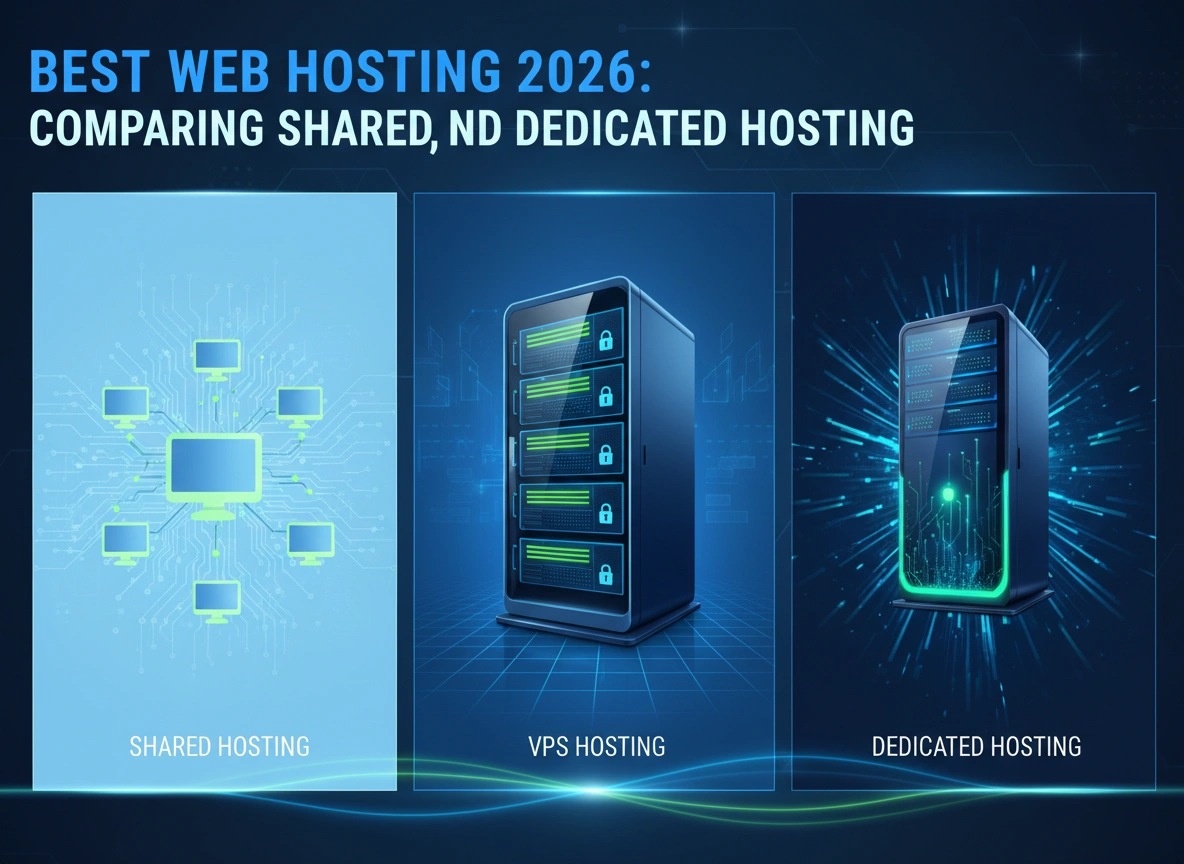
This comprehensive guide breaks down the core differences between shared, Virtual Private Server (VPS), and dedicated hosting. We will explore how each option works, weigh the pros and cons, and help you determine the perfect fit for your specific needs. If you want a quick overview of top providers this year, check out this guide on the Best Web Hosting 2026.
Why Choosing the Right Hosting Matters
Before diving into the specific types of hosting, you need to understand why this decision carries so much weight. Your web host does more than just store your files. It handles every request a user makes to access your content.
If your hosting server lacks the resources to handle those requests, your website will slow down or crash completely. Slow load times frustrate visitors and hurt your search engine visibility. Search engines prioritize fast, reliable websites. By selecting the correct hosting architecture, you ensure your website remains fast, secure, and accessible, no matter how much traffic you receive.
Let’s explore the three main categories of web hosting and see how they stack up against each other.
Shared Hosting: The Budget-Friendly Starter
Shared hosting is exactly what it sounds like. Your website shares a single physical server and its resources with hundreds, or even thousands, of other websites.
How Shared Hosting Works
Think of shared hosting like living in a large apartment building. You share the overall resources of the building—like the plumbing, electricity, and hallways—with all the other tenants. If one tenant throws a massive party and uses up all the hot water, your apartment might experience a shortage.
Similarly, in shared hosting, you share the server’s CPU, RAM, and bandwidth with other sites. If another website on your server suddenly gets a massive spike in traffic, it can slow down your website.
Pros and Cons of Shared Hosting
Pros:
- Highly Affordable: Because server costs are split among many users, shared hosting plans are incredibly cheap, often costing just a few dollars a month.
- Beginner-Friendly: Hosting companies design shared plans for beginners. They usually include simple control panels, one-click WordPress installations, and built-in website builders.
- Zero Maintenance: The hosting provider manages all server maintenance, hardware upgrades, and basic security configurations. You only need to focus on your website content.
Cons:
- Limited Resources: You have strict limits on bandwidth, storage, and processing power.
- Performance Fluctuations: The “bad neighbor” effect means another site’s traffic spike can cause your site to load slowly.
- Less Secure: Sharing a server environment slightly increases security vulnerabilities. If a hacker compromises one site, other sites on the same server could potentially face risks.
Who Should Use Shared Hosting?
Shared hosting works perfectly for individuals and small businesses just starting their online journey. If you run a personal blog, a small portfolio, or a local business website with low to moderate traffic (under 10,000 visitors a month), shared hosting provides everything you need without breaking the bank.
VPS Hosting: The Balanced Middle Ground
Virtual Private Server (VPS) hosting offers a significant step up from shared hosting. It bridges the gap between affordable shared plans and expensive dedicated servers.
How VPS Hosting Works
Using our real estate analogy, VPS hosting is like living in a townhome. You still share the same physical plot of land (the server) with other residents, but you have your own dedicated unit with your own designated resources.
VPS hosting uses virtualization technology to divide a single powerful server into multiple private, virtual servers. Each virtual server operates independently. You get a guaranteed amount of RAM, CPU power, and storage that belongs only to you. No other website on the physical server can tap into your allocated resources.
Pros and Cons of VPS Hosting
Pros:
- Reliable Performance: Because your resources are guaranteed, your website speed remains consistent. Other websites experiencing traffic spikes will not affect your performance.
- High Customization: You gain root access to your virtual server. This allows you to install custom software, configure specific security settings, and run specialized applications.
- Easy Scalability: Upgrading your resources takes just a few clicks. If you expect a traffic surge, you can easily add more RAM or CPU power to your VPS.
Cons:
- Higher Cost: VPS plans cost noticeably more than shared hosting, though they remain much cheaper than dedicated servers.
- Requires Technical Knowledge: While managed VPS plans exist, configuring and maintaining a virtual server often requires some technical background.
- Resource Ceilings: You still share a physical server. Eventually, you might outgrow the maximum resources the host can allocate to a single virtual instance.
Who Should Use VPS Hosting?
VPS hosting fits medium-sized businesses, rapidly growing blogs, and eCommerce stores. If your website receives between 20,000 and 100,000 monthly visitors, or if you need to run specific custom software that shared hosting restricts, a VPS offers the perfect balance of power and price. It provides the stability growing brands need to maintain a professional image.
Dedicated Hosting: Maximum Power and Control
Dedicated hosting sits at the top of the web hosting hierarchy. With this option, you rent an entire physical server entirely for your own use.
How Dedicated Hosting Works
Dedicated hosting is the equivalent of owning a private, single-family home. You do not share the property, the plumbing, or the driveway with anyone else. You have complete control over the entire environment.
Every ounce of processing power, memory, and bandwidth belongs exclusively to your website. You can configure the server architecture precisely to your liking, choose your preferred operating system, and implement the highest levels of security.
Pros and Cons of Dedicated Hosting
Pros:
- Ultimate Performance: Dedicated servers offer unmatched speed and reliability. They easily handle millions of monthly visitors and process massive amounts of data simultaneously.
- Maximum Security: Because you do not share the server with anyone else, you eliminate the risk of cross-site contamination. You can implement rigorous, enterprise-grade firewalls and security protocols.
- Total Control: You have absolute freedom to customize the hardware and software environment to meet your exact specifications.
Cons:
- Very Expensive: Renting an entire server requires a significant financial investment. Prices often start in the hundreds of dollars per month and can scale into the thousands.
- Advanced Technical Skills Required: Managing a dedicated server requires an experienced server administrator. You are responsible for optimizing the server, installing updates, and monitoring hardware health.
- Hardware Responsibility: While the host replaces failed components, you must monitor your server to ensure everything runs smoothly.
Who Should Use Dedicated Hosting?
Dedicated hosting is built for enterprise-level organizations, massive eCommerce platforms, and high-traffic websites that process sensitive data. If your website generates millions of page views, handles thousands of simultaneous financial transactions, or hosts highly confidential information (like healthcare records), you absolutely need the power and security of a dedicated server.
How to Choose the Right Hosting Plan
Selecting the best web hosting architecture requires an honest assessment of your current situation and future goals. Keep the following factors in mind when making your choice:
- Traffic Volume: Estimate your current and projected monthly visitors. Shared hosting handles low traffic, VPS manages moderate to high traffic, and dedicated servers conquer massive traffic.
- Technical Expertise: Consider your team’s skills. If you have no technical background, stick to shared hosting or look for “fully managed” VPS plans where the host handles the heavy lifting.
- Budget: Balance your performance needs with your financial reality. Do not overspend on a dedicated server if a VPS can comfortably handle your current workload.
- Security Requirements: If you process credit cards directly on your site or store sensitive customer data, you need the isolated environments provided by VPS or dedicated hosting to comply with strict security standards.
Final Thoughts
Your web hosting choice shapes the digital experience you provide to your customers. Understanding the distinctions between shared, VPS, and dedicated hosting empowers you to make a strategic business decision.
Start by evaluating your actual traffic metrics and technical capabilities. If you are launching a brand new project on a tight budget, shared hosting gets you off the ground quickly. As your audience grows and your technical demands increase, upgrading to a VPS provides a reliable stepping stone. Finally, when you reach enterprise status and require absolute control, a dedicated server will deliver the uncompromising performance you need. Review your website analytics today to determine if your current hosting plan still serves your business effectively.

