


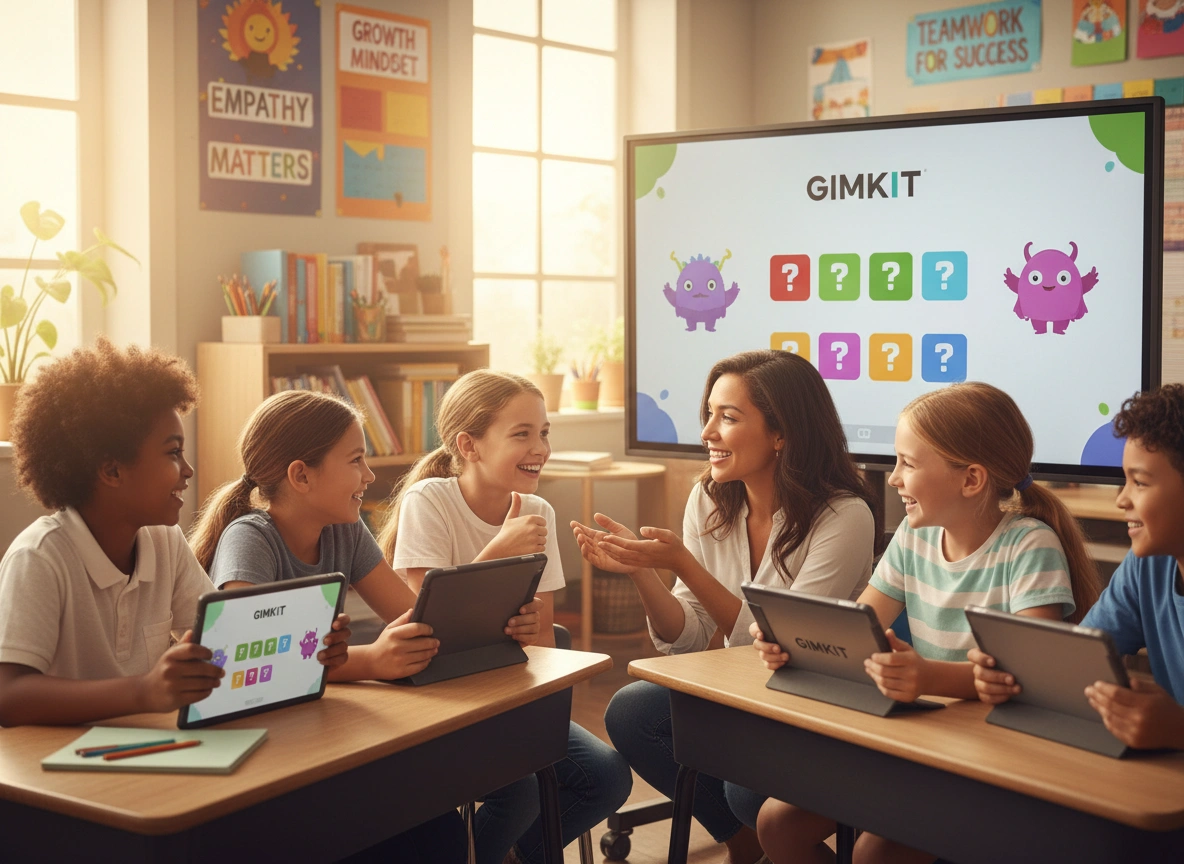
Education is evolving beyond purely academic subjects. Today, schools recognize the immense value of social-emotional learning (SEL), which equips students with the skills to navigate their emotions, build positive relationships, and make sound choices. As educators seek innovative tools to integrate SEL into their classrooms, digital platforms like Gimkit are emerging as powerful allies. This interactive game-show-style platform does more than just review content; it creates an environment ripe for developing crucial life skills.
This article explores how Gimkit supports social-emotional learning in the classroom. We will examine how its unique features align with the core competencies of SEL and provide practical examples for teachers to implement these strategies effectively. By blending academic rigor with engaging gameplay, Gimkit helps foster well-rounded, emotionally intelligent students.
What is Social-Emotional Learning (SEL)?
Before diving into Gimkit’s role, it’s important to understand the framework of SEL. The Collaborative for Academic, Social, and Emotional Learning (CASEL) defines SEL as the process through which individuals acquire and apply the knowledge, skills, and attitudes to develop healthy identities, manage emotions, achieve goals, feel and show empathy for others, establish and maintain supportive relationships, and make responsible decisions.
CASEL outlines five core competencies that form the foundation of SEL:
- Self-Awareness: The ability to understand one’s own emotions, thoughts, and values and how they influence behavior.
- Self-Management: The ability to manage one’s emotions, thoughts, and behaviors effectively in different situations.
- Social Awareness: The ability to take the perspective of and empathize with others from diverse backgrounds.
- Relationship Skills: The ability to establish and maintain healthy and supportive relationships and to navigate social settings effectively.
- Responsible Decision-Making: The ability to make caring and constructive choices about personal behavior and social interactions.
Gimkit’s game modes and collaborative features provide a dynamic playground for students to practice and strengthen each of these competencies.
Fostering Self-Awareness and Self-Management
Gimkit’s fast-paced environment requires students to think on their feet, creating a natural space for them to observe and manage their reactions.
Understanding Emotional Responses
The excitement of earning in-game currency, the frustration of a wrong answer, or the anxiety of a ticking clock are all real emotions students experience while playing. This gives teachers a valuable opportunity to help students identify what they are feeling. A simple debrief after a game can start a conversation: “How did you feel when you got a question right?” or “What was it like when you lost all your cash in ‘The Floor is Lava’ mode?” These discussions help students connect their in-game experiences to real-world emotions, building their self-awareness.
Practicing Self-Management and Resilience
Gimkit is not just about getting answers right; it involves strategy and managing setbacks. Game modes like “Trust No One” or classic modes with power-ups can lead to sudden shifts in fortune. A student leading one moment might be at the bottom the next. This teaches resilience and self-management. Instead of giving up after a setback, students learn to regulate their disappointment, reassess their strategy, and persevere.
Teachers can facilitate this by framing the game as a low-stakes practice for handling challenges. By celebrating effort and strategic thinking over just winning, educators help students develop a growth mindset and the ability to manage their impulses and emotions constructively.
Building Social Awareness and Relationship Skills
While Gimkit can be played individually, its team-based and collaborative modes are where it truly shines as an SEL tool. These modes transform a simple quiz into a lesson on teamwork, communication, and empathy.
Encouraging Collaboration in Team Mode
In Team Mode, students must work together to achieve a common goal, such as reaching a target cash amount. This structure inherently promotes relationship skills. To succeed, team members must communicate, delegate roles, and support one another. Some students might be strong at answering questions quickly, while others excel at strategic use of power-ups. Teams that learn to leverage each member’s strengths are often the most successful.
This collaborative environment builds social awareness. Students learn to listen to their peers’ ideas and appreciate different perspectives. They see firsthand that collective success is more rewarding than individual glory. After a team game, teachers can ask reflection questions like, “What did your team do well to work together?” or “How did you handle disagreements within your group?”
Developing Empathy in “Trust No One”
The game mode “Trust No One” is particularly effective for exploring social dynamics. In this mode, players work together to identify “impostors” among them. To succeed, students must pay close attention to others’ actions, communicate their suspicions clearly, and make collective decisions. It requires them to consider others’ perspectives and analyze behavior.
While it seems competitive, this mode is a powerful tool for teaching empathy and social awareness. Students learn how it feels to be wrongly accused or to make a difficult judgment call. Post-game discussions can focus on the importance of evidence-based reasoning and the impact of accusations on others, drawing parallels to real-life social situations.
Promoting Responsible Decision-Making
Every Gimkit game is a series of choices. Students must decide whether to answer another question, buy an upgrade, or use a power-up. These decisions have immediate consequences, providing a perfect sandbox for practicing responsible decision-making.
Weighing Risks and Rewards
Gimkit’s in-game economy forces students to think critically about their choices. Should they save their money for a powerful upgrade or spend it on smaller, incremental gains? Should they use a power-up that helps them but might hinder a classmate? These questions require students to analyze risks, consider long-term consequences, and think ethically.
For example, in a game where students can “ice” a classmate, freezing them for a few seconds, a teacher can initiate a conversation about the ethics of such actions. Is it better to focus on your own progress or to hinder others? This prompts students to consider how their decisions affect the community, a cornerstone of responsible decision-making.
Using KitCollab for Constructive Choices
Gimkit’s KitCollab feature allows students to contribute to creating the question set itself. Each student submits a question and, in some cases, can review and approve their peers’ submissions. This creative process encourages responsible participation. Students must think carefully to craft relevant, accurate, and helpful questions.
This feature gives students a sense of ownership and agency. They are not just consumers of content but active creators. This responsibility encourages them to make constructive contributions that will benefit the entire class, reinforcing the link between personal actions and group well-being.
Integrating Gimkit for SEL: Practical Examples
To effectively leverage Gimkit for social-emotional learning, intentional integration is key. Here are a few ways teachers can use the platform to target specific SEL competencies:
- For Self-Awareness: Use Gimkit as a warm-up activity and follow it with a one-minute “emotional check-in.” Have students jot down how the game made them feel and why.
- For Self-Management: In a particularly challenging game mode, set a class goal around resilience. Celebrate students who recover from a major setback or who maintain a positive attitude despite not winning.
- For Social Awareness: Before playing a team game, have groups create a “team charter” outlining how they will communicate and support each other.
- For Relationship Skills: Use the “Humans vs. Zombies” team mode and assign roles within each team. Debrief afterward on how well the teams communicated and coordinated their efforts.
- For Responsible Decision-Making: Create a Gimkit quiz with questions based on ethical dilemmas relevant to students’ lives. Use the game as a springboard for a deeper class discussion about making thoughtful choices.
The Future of Learning is Holistic
Gimkit demonstrates that academic learning and social-emotional development do not have to be separate pursuits. By embedding SEL practice within an engaging and motivating game-based platform, educators can help students build essential life skills without sacrificing curriculum goals. The platform’s ability to foster collaboration, resilience, and strategic thinking makes it an invaluable asset in the modern classroom.
As we continue to recognize the importance of educating the whole child, tools like Gimkit will play an increasingly vital role. They provide a space where students can learn about math, history, or science while also learning about themselves, their peers, and how to navigate the world with confidence and compassion.

