


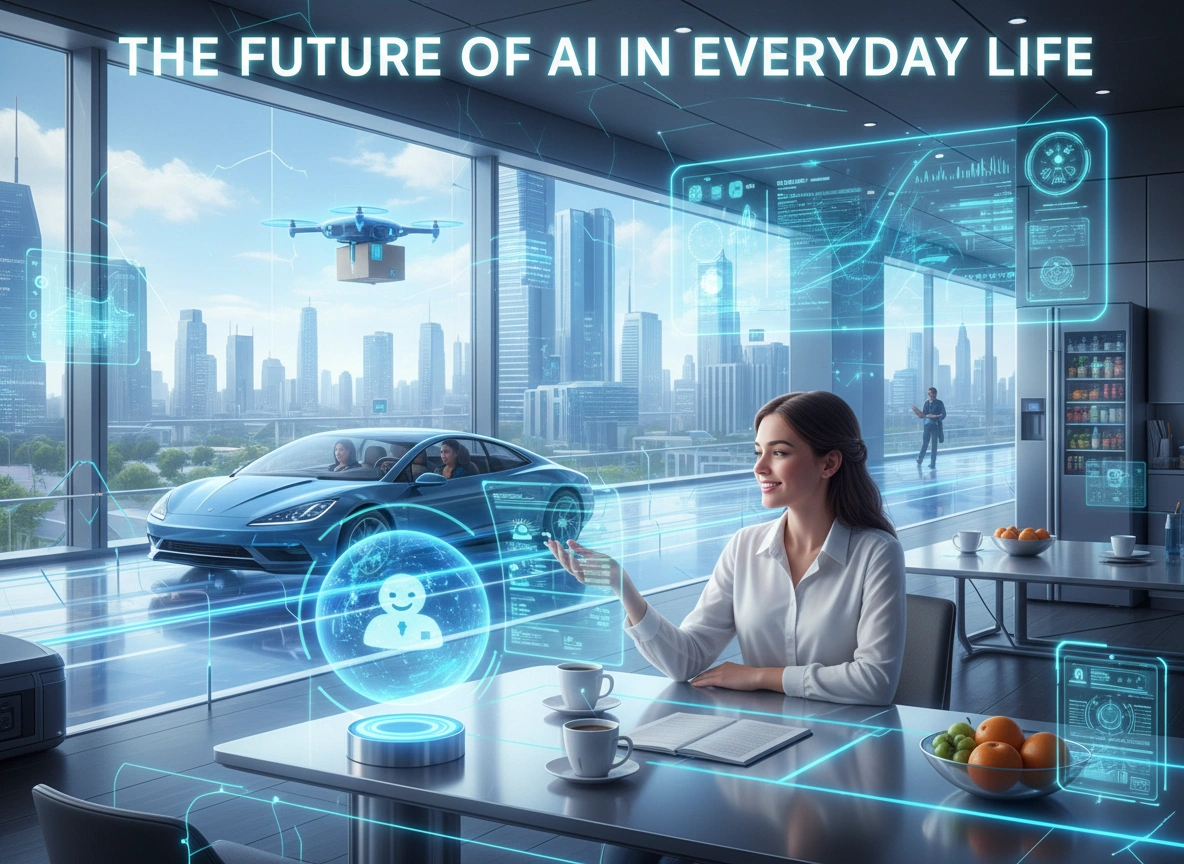
Artificial intelligence is no longer a concept confined to science fiction. It has quietly woven itself into the fabric of our daily routines, influencing how we work, communicate, and live. From the algorithms that recommend our next movie to the virtual assistants that manage our schedules, AI is already a significant part of the modern world. This integration is only set to deepen, promising a future where AI reshapes nearly every aspect of our existence.
This article explores the future of artificial intelligence in everyday life. We will examine its transformative potential across key sectors, including healthcare, education, transportation, and entertainment. We will also consider the ethical challenges that accompany these powerful advancements, offering a balanced view of what lies ahead. Understanding this evolution is crucial for navigating the changes and harnessing the benefits of an AI-powered future.
AI’s Growing Role in Healthcare
The healthcare industry is on the verge of a revolution driven by artificial intelligence. AI’s ability to analyze vast datasets with incredible speed and accuracy is creating new possibilities for diagnostics, treatment, and personalized patient care. This technology is moving from the lab to the clinic, promising to make healthcare more proactive, precise, and accessible.
Predictive Diagnostics and Personalized Medicine
One of the most significant impacts of AI in healthcare is in early disease detection. Machine learning models can analyze medical images like X-rays, MRIs, and CT scans to identify abnormalities that might be missed by the human eye. For instance, AI algorithms are already being used to detect early signs of cancer, diabetic retinopathy, and neurological disorders with remarkable accuracy. By catching diseases sooner, AI enables earlier intervention and can significantly improve patient outcomes.
Beyond diagnostics, AI is paving the way for truly personalized medicine. By analyzing a patient’s genetic information, lifestyle, and environment, AI systems can help doctors predict their risk for certain diseases. This allows for the creation of customized prevention plans. Furthermore, AI can help determine the most effective treatment protocol for an individual, moving away from a one-size-fits-all approach and tailoring therapies to a person’s unique biological makeup.
Streamlining Hospital Operations
The impact of AI extends beyond direct patient care to the operational side of healthcare. Hospitals and clinics are complex systems with immense logistical challenges. AI is helping to optimize these operations, leading to greater efficiency and reduced costs. AI-powered systems can manage patient scheduling, predict patient admission rates, and allocate staff and resources more effectively.
Administrative tasks, which consume a significant amount of a healthcare professional’s time, can also be automated. AI can handle medical record management, billing, and transcription, freeing up doctors and nurses to focus on what they do best: caring for patients. This not only improves efficiency but also helps reduce professional burnout, a critical issue in the healthcare sector.
Transforming Education for the Modern Learner
Education is another area ripe for transformation by artificial intelligence. Traditional teaching methods often struggle to cater to the diverse learning styles and paces of individual students. AI offers a path toward a more personalized, engaging, and effective educational experience for learners of all ages.
Personalized Learning Paths
AI-powered educational platforms can adapt to each student’s unique needs. These systems can assess a student’s strengths and weaknesses in real-time and deliver customized content and exercises to help them master specific concepts. If a student is struggling with algebra, the AI can provide additional practice problems and targeted tutorials. Conversely, if a student excels in a subject, the system can offer more advanced material to keep them challenged and engaged.
This adaptive learning approach helps ensure that no student is left behind or held back. It empowers learners to progress at their own pace, building a strong foundation of knowledge and fostering a genuine love for learning. Teachers, in turn, are freed from the burden of creating one-size-fits-all lesson plans and can act more as facilitators and mentors, providing individual support where it is needed most.
The Evolving Role of the Educator
The integration of AI into the classroom does not make teachers obsolete; instead, it redefines their role. With AI handling routine tasks like grading and content delivery, educators can dedicate more time to higher-value activities. They can focus on fostering critical thinking, creativity, and collaborative skills—abilities that are uniquely human and essential for success.
AI tools can also provide teachers with valuable insights into student performance. Dashboards can highlight which students are struggling and which concepts the entire class finds difficult. This data-driven feedback allows educators to adjust their teaching strategies and provide timely interventions, creating a more responsive and effective learning environment.
The Future of Transportation: Autonomous and Intelligent
The way we move from one place to another is undergoing a fundamental shift, thanks to advancements in artificial intelligence. Autonomous vehicles and intelligent traffic management systems promise a future with safer roads, reduced congestion, and greater mobility for everyone.
The Rise of Autonomous Vehicles
Self-driving cars are perhaps the most visible application of AI in transportation. Companies are investing billions of dollars in developing vehicles that can navigate roads without human intervention. These vehicles use a sophisticated array of sensors, cameras, and powerful AI algorithms to perceive their environment, predict the actions of other road users, and make split-second driving decisions.
The potential benefits of widespread autonomous vehicle adoption are enormous. It is estimated that human error is a factor in over 90% of traffic accidents. By removing the human element, self-driving cars could dramatically reduce the number of collisions, injuries, and fatalities on our roads. They also promise to give us back countless hours currently spent behind the wheel, which can be used for work, relaxation, or entertainment.
Smart Cities and Traffic Management
AI’s role in transportation goes beyond individual vehicles. It is also the backbone of smart city initiatives aimed at creating more efficient and livable urban environments. AI-powered traffic management systems can analyze real-time data from traffic cameras, road sensors, and GPS devices to optimize traffic flow.
These systems can dynamically adjust traffic light timings, reroute vehicles to avoid congestion, and provide drivers with up-to-the-minute information about road conditions. By reducing traffic jams and idling time, intelligent transportation systems can decrease travel times, lower fuel consumption, and reduce air pollution, making our cities cleaner and more pleasant places to live.
Entertainment and Productivity Reimagined
AI is also changing how we entertain ourselves and manage our personal productivity. From hyper-personalized content recommendations to intelligent assistants that organize our lives, AI is making our leisure time more enjoyable and our workdays more efficient.
Content streaming services use sophisticated AI algorithms to analyze your viewing history and recommend movies and shows you are likely to enjoy. Music platforms do the same, creating personalized playlists that introduce you to new artists based on your listening habits. In the future, we may even see AI-generated entertainment, where stories, music, and even virtual worlds are created on the fly to match a user’s specific tastes.
In terms of productivity, AI-powered virtual assistants are becoming increasingly capable. They can manage our calendars, schedule meetings, answer emails, and remind us of important tasks. This helps us stay organized and focused, freeing up mental energy for more creative and strategic work. As these assistants become more intelligent and integrated into our devices, they will function as a true extension of our own capabilities.
The Ethical Imperative
As we embrace the benefits of artificial intelligence, we must also confront the ethical challenges it presents. Issues of data privacy, algorithmic bias, and job displacement require careful consideration and proactive solutions.
AI systems are trained on vast amounts of data, and how that data is collected, stored, and used raises significant privacy concerns. We must establish clear regulations to ensure that personal information is protected. Furthermore, if the data used to train AI models reflects existing societal biases, the AI can perpetuate and even amplify those biases. This could lead to unfair outcomes in areas like hiring, loan applications, and criminal justice. Ensuring fairness and transparency in AI algorithms is a critical task.
The potential for AI to automate tasks currently performed by humans also raises concerns about job displacement. While AI will undoubtedly create new jobs, there will be a transitional period where certain roles become obsolete. We must invest in education and retraining programs to equip the workforce with the skills needed for the jobs of the future.
Conclusion
The future of artificial intelligence in everyday life is one of profound transformation. AI is set to enhance our health, personalize our education, revolutionize our transportation systems, and enrich our daily experiences in countless ways. It holds the promise of solving some of humanity’s most pressing challenges, from curing diseases to creating more sustainable cities.
However, realizing this positive future requires a thoughtful and responsible approach. We must address the ethical considerations of privacy, bias, and economic impact head-on. By fostering public dialogue, developing robust regulations, and prioritizing human values, we can guide the development of AI in a direction that benefits all of society. The journey ahead is complex, but the potential rewards are immeasurable.
Please click here for more info.

