


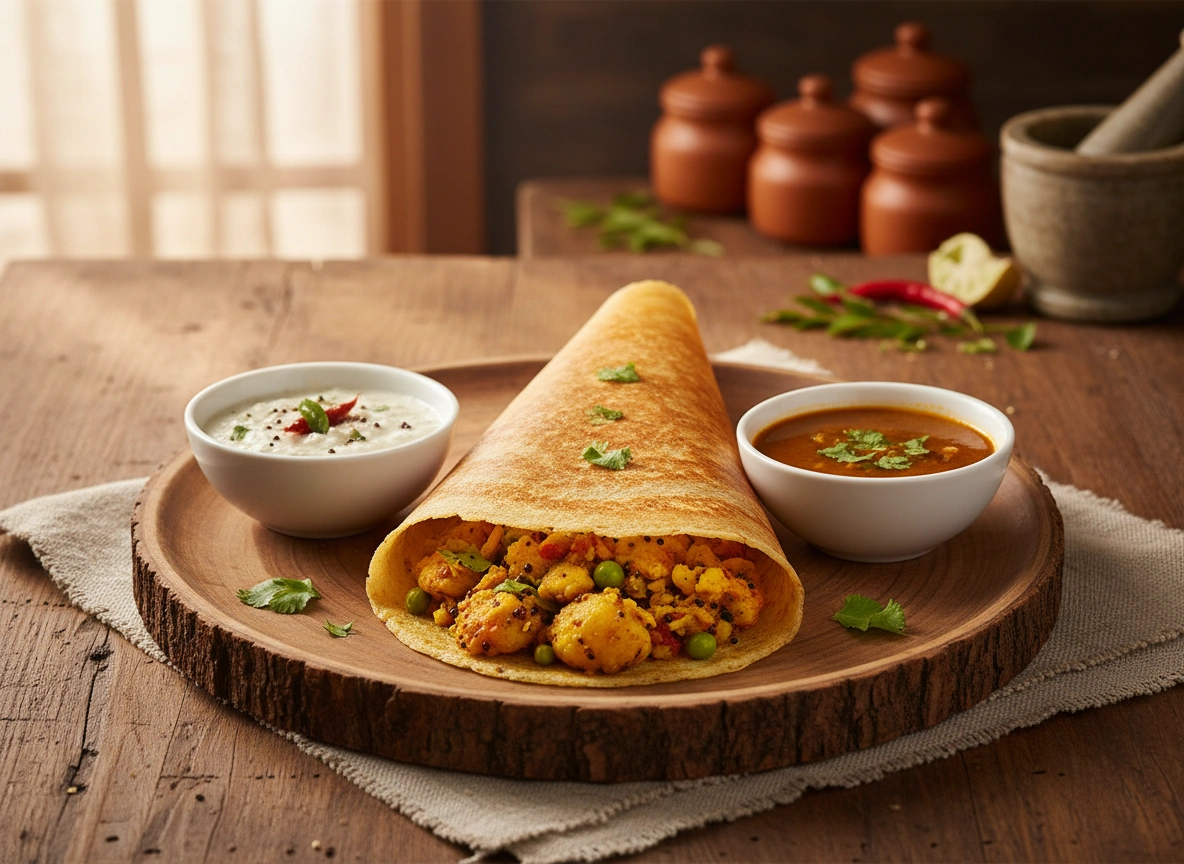
South Indian cuisine offers some of the most vibrant, flavorful, and naturally vegan dishes in the world, but few items are as iconic as the masala dosa. A crispy, golden-brown crêpe made from fermented rice and lentils, wrapped around a spiced potato filling—it is a breakfast staple that has gained global adoration.
While many people enjoy dosa at restaurants, mastering it at home often feels intimidating. The fermentation process, spreading the batter, and achieving that restaurant-style crispiness can seem like a mystery. However, with the right technique and a bit of patience, you can create a dosa that rivals your favorite local eatery.
This guide will walk you through everything you need to know. We will cover the science of fermentation, the secret to a perfect potato masala, and the technique for swirling the batter like a pro.
The Cultural Icon on Your Plate
The dosa is more than just food; it is a culinary tradition that dates back centuries. Originating in South India—with debates about whether it started in Tamil Nadu or Karnataka—the dosa was originally thicker and softer. The thin, crispy version we know today evolved over time, becoming a staple in homes and street stalls alike.
The classic “Masala Dosa” specifically refers to the version stuffed with a savory potato and onion mixture (bhaji or palya). Traditionally served with coconut chutney and sambar (a lentil-based vegetable stew), it provides a complete nutritional profile of carbohydrates, proteins, and healthy fats. Best of all, the traditional recipe is naturally vegan and gluten-free, making it an excellent choice for diverse dietary needs.
Part 1: The Foundation – The Dosa Batter
The soul of a good dosa lies in its batter. You cannot rush this step. The distinct sourdough-like tang and the airy, crispy texture come from natural fermentation.
Ingredients for the Batter
- Idli Rice or Parboiled Rice: 3 cups (This short-grain rice provides the structure).
- Raw Rice (Sona Masoori): 1 cup (Adds crispiness).
- Urad Dal (Whole White Lentils): 1 cup (Provides protein and aids fermentation).
- Chana Dal (Split Chickpeas): 2 tablespoons (Crucial for golden color).
- Fenugreek Seeds (Methi): 1 teaspoon (Aids fermentation and adds flavor).
- Poha (Flattened Rice): ½ cup (Makes the dosa texture lighter).
- Water: For soaking and grinding.
- Salt: To taste (add after fermentation in colder climates, before in warmer ones).
Step-by-Step Batter Preparation
1. Rinse and Soak
Wash the rice and dals separately until the water runs clear. This removes excess starch, which can make the batter slimy.
- Bowl 1: Soak both types of rice together with the fenugreek seeds.
- Bowl 2: Soak the Urad dal and Chana dal together.
- Soak everything for at least 5 to 6 hours.
- Tip: Soak the Poha separately for just 15 minutes before grinding.
2. Grinding the Batter
Drain the water, but reserve some of the soaking water from the dal—it is rich in wild yeast and helps fermentation.
- Grind the Dal first: Add the soaked lentils into a wet grinder or high-speed blender. Add ice-cold water gradually. Grind until it is fluffy, smooth, and airy. It should look like whipped cream. Transfer to a large bowl.
- Grind the Rice: Add the rice and soaked poha to the grinder. Grind this to a slightly gritty texture (not as smooth as the dal). It should feel like fine sand between your fingers.
- Mix: Combine the rice paste with the fluffy dal batter. Use your clean hands to mix vigorously for 2-3 minutes. The warmth from your hands kickstarts the fermentation process.
3. Fermentation
Cover the bowl with a lid, but do not seal it airtight. Leave it in a warm, draft-free spot for 8 to 12 hours.
- Signs of success: The batter should rise significantly (almost double) and have a bubbly, airy texture. It should smell slightly sour and yeasty.
Part 2: The Heart – The Potato Masala Filling
While your batter ferments, you can plan your filling. The potato masala (often called aloo masala) should be soft, savory, and vibrant yellow from turmeric.
Ingredients for the Filling
- Potatoes: 4 large, boiled and peeled.
- Onions: 2 medium, sliced lengthwise.
- Green Chilies: 3-4, slit or chopped (adjust to heat preference).
- Ginger: 1 inch piece, finely grated.
- Curry Leaves: 1 sprig.
- Mustard Seeds: 1 teaspoon.
- Chana Dal (Split Chickpeas): 1 teaspoon (for crunch).
- Urad Dal: 1 teaspoon.
- Turmeric Powder: ½ teaspoon.
- Asafoetida (Hing): A pinch.
- Oil: 2 tablespoons.
- Salt: To taste.
- Coriander leaves: For garnish.
Making the Masala
- Mash the Potatoes: Roughly mash the boiled potatoes. Do not make a smooth paste; leave some chunks for texture.
- Temper the Spices: Heat oil in a pan or wok. Add mustard seeds. Once they splutter, add the chana dal and urad dal. Fry until they turn golden brown.
- Add Aromatics: Toss in the curry leaves, green chilies, grated ginger, and asafoetida. Sauté for 30 seconds until fragrant.
- Sauté Onions: Add the sliced onions. Cook them until they are translucent and soft, but not browned. You want them to retain a bit of sweetness.
- Combine: Add the turmeric and salt. Mix well. Add the mashed potatoes and mix everything thoroughly.
- Simmer: Sprinkle a splash of water (about 2-3 tablespoons) over the mixture. Cover and let it steam on low heat for 3-4 minutes. This helps the flavors meld and ensures the masala isn’t dry.
- Finish: Garnish with fresh chopped coriander.
Part 3: The Art – Making the Dosa
Now comes the moment of truth: cooking the dosa. You will need a cast-iron tawa (skillet) or a high-quality non-stick flat pan.
The Technique
- Prepare the Pan: Heat your tawa on medium-high heat. To test if it’s ready, sprinkle a few drops of water on it. The water should sizzle and evaporate immediately.
- Seasoning (For Cast Iron): If using cast iron, drizzle a drop of oil and wipe it clean with a cloth or a cut onion. This seasons the pan and prevents sticking.
- Pour and Swirl:
-
- Reduce the heat to low before pouring batter (this prevents the batter from cooking too fast before you can spread it).
- Pour a ladleful of batter into the center of the pan.
- Using the bottom of the ladle, gently press the center and spiral outward in a circular motion. Keep expanding the circle until the batter is thin and covers the pan.
- Crisping Up:
-
- Increase the heat to medium-high.
- Drizzle a teaspoon of oil or vegan butter around the edges and a little in the center.
- Let it cook undisturbed. You will see the batter go from white to translucent, then slowly turn golden brown.
- Stuffing:
-
- Once the bottom looks golden and crisp, reduce the heat.
- Place a generous scoop of the potato masala in the center.
- Fold the dosa over the filling (in half or a roll).
Tips for the Perfect Texture and Flavor
Achieving that restaurant-quality finish requires attention to detail. Here are expert tips to elevate your game:
- Temperature Control: This is the biggest secret. If the pan is too hot when you pour, the batter will stick and won’t spread. If it’s too cold, you won’t get holes or crispiness. Always lower heat to pour, then raise heat to roast.
- Batter Consistency: Your batter should be pouring consistency, similar to heavy cream, but not watery. If it’s too thick, the dosa will be spongy (like a pancake). If too thin, it won’t hold shape.
- The Sugar Trick: Add a tiny pinch of sugar to the batter right before making dosas. The caramelization of the sugar helps achieve that rich, reddish-golden color.
- Cast Iron vs. Non-Stick: While non-stick is easier for beginners, a well-seasoned cast-iron pan retains heat better and yields a superior, crispier texture.
Common Mistakes to Avoid
Even seasoned cooks make mistakes with dosa. Watch out for these pitfalls:
- Over-fermenting: If the batter smells extremely sour or has risen and then collapsed, it is over-fermented. The dosa will stick to the pan and taste too sour. You can fix this slightly by mixing in a little fresh rice flour and water.
- Grinding too smooth: If the rice is ground into a super-fine paste, the dosa may turn out rubbery rather than crispy. The slight grit in the rice batter provides structure.
- Refrigerating immediately: Do not put the batter in the fridge immediately after grinding. It needs warmth to ferment. Only refrigerate after fermentation is complete.
Serving Suggestions and Accompaniments
A masala dosa is rarely eaten alone. To create the full experience, serve your hot, crispy dosa with:
- Coconut Chutney: Blend fresh coconut, green chilies, roasted chana dal, ginger, and salt. Temper with mustard seeds and curry leaves.
- Tomato-Onion Chutney: A spicy, tangy red chutney made by sautéing tomatoes, dried red chilies, and onions, then blending them smooth.
- Sambar: A flavorful lentil stew loaded with vegetables like drumstick, pumpkin, and carrots, spiced with tamarind and sambar powder.
- Filter Coffee: Finish the meal with a strong cup of South Indian filter coffee (use oat milk or almond milk for a vegan version).
Conclusion
Making the perfect vegan masala dosa at home is a labor of love, but the reward is undeniable. The contrast between the crisp, fermented crepe and the soft, savory potato filling creates a culinary experience that is hard to beat.
Don’t be discouraged if your first few dosas aren’t perfectly round or if they stick to the pan. Dosa making is a skill refined through repetition. Once you master the rhythm of the swirl and the heat of the pan, you will find yourself making this wholesome, delicious meal a regular part of your kitchen rotation. Gather your ingredients, soak your rice, and get ready to bring the taste of South India to your dining table.
Please visit website for more info.

